Sweets
Dearborn sweets and bakeries: baklawa, knafeh, maamoul and where to buy them
The pastry houses and bakeries of Dearborn and nearby: what knafeh, baklawa, maamoul and manakeesh are, and the shops on Schaefer Road and beyond that make them.
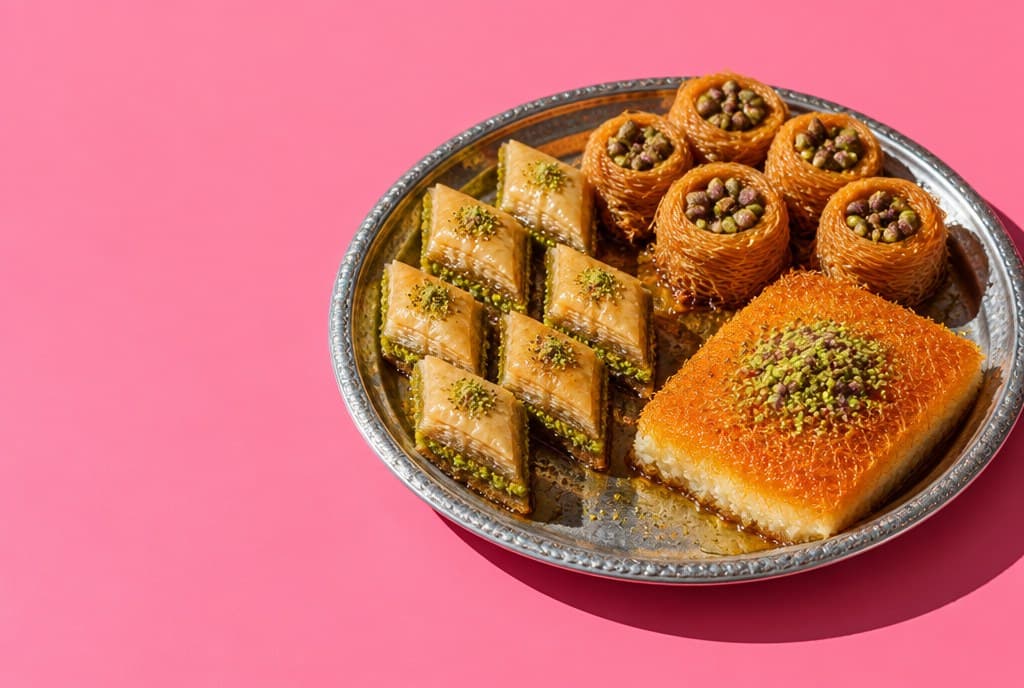
What you are looking at in the case
Baklawa. Layers of filo with chopped pistachios, walnuts or cashews, soaked in syrup. In Arabic it is spelled and said with a w.
Knafeh. Shredded pastry over soft cheese, baked until crisp on the outside and stretchy inside, finished with syrup and crushed pistachio. The Nabulsi style, from Nablus, uses a firm, slightly salty cheese and an orange-tinted crust. Order it warm.
Maamoul. A semolina and butter cookie pressed in a wooden mold and filled with dates, pistachios or walnuts. Boxes of these are what you bring to someone's house at Eid.
Qatayef. Small pancakes cooked on one side, filled with cream or nuts, then folded. Mostly a Ramadan sweet; bakeries make them fresh every afternoon of the month.
Manakeesh. Not a sweet. A round flatbread baked with zaatar and olive oil, cheese, or spiced ground meat. It is breakfast, and it costs less than a latte.
The pastry houses
Middle Eastern pastry house founded in Dearborn in 1979 by the late Riad Shatila and still family-run; the company is led by his widow Zinat Shatila. It sells baklawa, maamoul, knafeh, French pastries and ice cream, ships nationwide, and has branches in West Bloomfield and (since 2023) Dearborn Heights at 26771 Ford Rd.
What to order: Pistachio baklawa, Knafeh, Mango ice cream.
Fully halal per Zabihah listing (Muslim-owned, owners confirmed halal status); no certifier named.
14300 W Warren Ave, Dearborn, MI 48126DirectionsWebsiteDetails
Family-owned Palestinian sweets bakery on Schaefer Road, operating since 1990. It makes baklawa, kunafa, maamoul and namoura daily, offers sugar-free options and custom cakes, and ships gift trays nationwide.
What to order: Pistachio baklawa, Kunafa with ashta, Maamoul.
Sweets bakery (no meat); halal status not stated on the business site and no certifier listed.
5755 Schaefer Rd, Dearborn, MI 48126DirectionsWebsiteDetails
Small Egyptian sweets shop on Schaefer Road (a different business from Masri Sweets a few blocks south) selling Middle Eastern and European desserts plus ice cream, with seating for roughly 20-25.
What to order: Kunafa, Egyptian pastries, Ice cream.
Fully halal per Zabihah listing (Muslim owners confirmed status); no certifier named.
6235 Schaefer Rd, Dearborn, MI 48126DirectionsDetails
The bread bakeries
Morning bakery and butcher on West Warren in Dearborn Heights baking manakeesh and kaak daily, with counter service for takeout.
What to order: Manakeesh, Kaak, Fresh breads.
Fully halal per Zabihah listing (staff assurance, no alcohol); no certifier named.
24302 W Warren St, Dearborn Heights, MI 48127DirectionsDetails
Palestinian-run manakeesh and kaak bakery-cafe on Ford Road in Canton with dine-in seating and a full coffee bar.
What to order: Cheese and avocado manakeesh, Labneh and vegetable kaak, Coffee bar.
Fully halal per Zabihah (certified halal, staff assurance); no certifier named.
43729 Ford Rd, Canton, MI 48187DirectionsDetails
And for Bengali sweets
Milk-based mishti from Hamtramck's Banglatown, a different tradition entirely.
Bangladeshi sweets shop and restaurant on the Conant Avenue 'Banglatown' strip, serving mishti alongside curries and biryani; no alcohol, prayer space on request.
What to order: Bangladeshi sweets (mishti), Biryani, Curries.
Fully halal per Zabihah (halal sign visible, certified halal); no certifier named.
11945 Conant Ave, Hamtramck, MI 48212DirectionsDetails
Buying for a crowd
- Mixed trays are sold by weight. Tell the counter how many people you are feeding and they will size it.
- Knafeh does not travel well cold. Buy it last, eat it first.
- Before both Eids, order ahead. The lines on the last two days are long.
Sources (5)
Definitions follow the linked reference articles. Bakery facts are sourced on each place page.
Questions people ask
What is knafeh?
An Arab dessert of shredded pastry layered over mild white cheese, baked and soaked in sugar syrup. The best-known version comes from Nablus in Palestine. It is eaten warm, often for breakfast in a sesame bun.
Are Middle Eastern sweets halal?
They are made from flour, butter, nuts, cheese and syrup, with no meat. The things to check in any dessert are gelatin and alcohol-based flavorings, which traditional baklawa and knafeh do not use. The place pages note how each shop states its halal status.
Do Dearborn bakeries ship?
Several do. Shatila and Masri Sweets both ship trays nationwide, which is what most people order for Eid.