Yemeni
Yemeni food in Dearborn and Hamtramck: what mandi, haneeth, fahsa and saltah are, and where to eat them
A plain-English guide to the Yemeni menu, from slow-roasted lamb over rice to the stew that arrives still boiling, with the Metro Detroit restaurants that serve it.
The menu, decoded
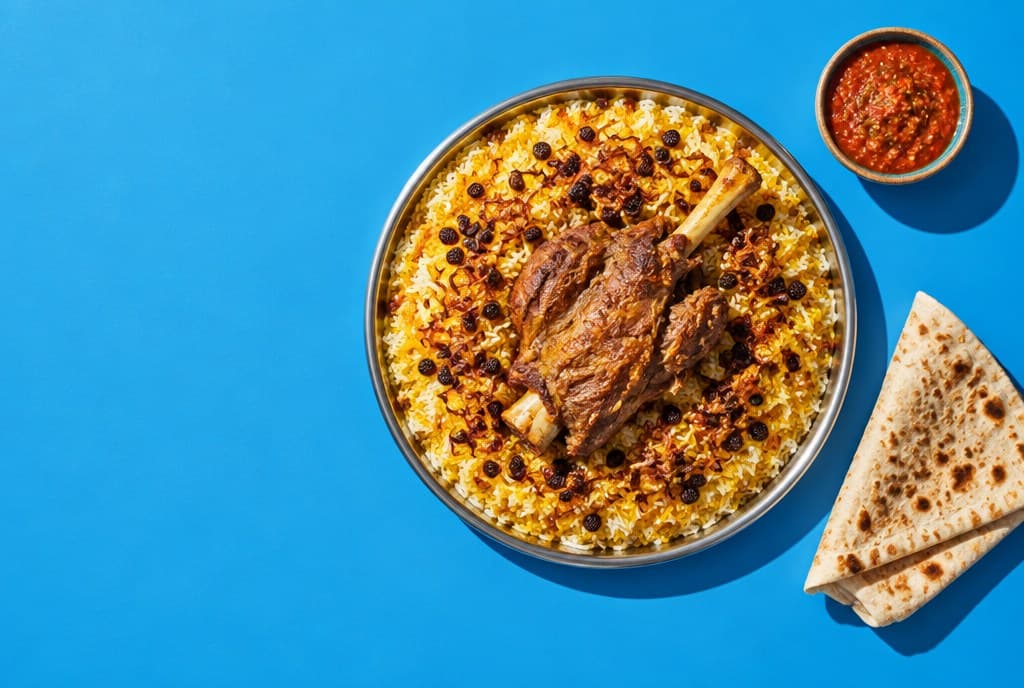
Mandi. Meat and rice cooked with a spice blend in a pit-style oven. It comes from Hadhramaut and is widely considered Yemen's national dish. Lamb or chicken, a mountain of rice, usually enough for two.
Haneeth. Lamb rubbed with spices and slow-roasted in a clay oven until it pulls apart with a spoon, served over rice. If you only order one thing, this is the one most regulars order.
Saltah. A brown meat stew topped with hilbah, a froth made from fenugreek, and sahawiq, a fresh chili and herb relish. It is a lunch dish in Yemen and is served bubbling in a stone pot called a madra.
Fahsa. The lamb-forward cousin of saltah: shredded lamb in its own broth, spiced after cooking, with hilbah on top, in the same stone pot.
Zurbian. Lamb, rice and saffron, cooked together. The Yemeni answer to biryani.
Marag. Lamb broth, often brought to the table before the meal with lemon.
The bread. Baked against the wall of a clay oven, wider than the plate, and used as the fork.
To finish. Sabaya or bint al-sahn is a layered butter pastry served with honey and black seeds. Tea is shai Adeni: black tea boiled in milk with cardamom and cloves, very sweet.
Where to eat it
Yemeni restaurant that opened on Michigan Avenue in 2015 under owner Ismael Aljahmi, after a first location at 10327 Dix Ave in the Southend. Sheeba now lists four locations (East Dearborn, West Dearborn at 22048 Michigan Ave, Canton and Sterling Heights) and is known for slow-roasted haneeth and mandi platters.
What to order: Lamb haneeth, Fahsa, Lamb and chicken mandi.
Fully halal and alcohol-free per Zabihah; the company site also states it is a halal establishment.
13919 Michigan Ave, Dearborn, MI 48126DirectionsWebsiteDetails
Casual Yemeni restaurant on Joseph Campau serving meat-and-rice specialties with complimentary tea. Arab American News reported in 2014 that chef Maslah Thabet had run it for 25 years, making it one of the longest-running Yemeni kitchens in Metro Detroit.
What to order: Lamb haneeth, Fahsa, Lamb soup (marag) and tandoor bread.
Fully halal per Zabihah (certified halal, staff assurance); no certifier named.
8740 Joseph Campau Ave, Hamtramck, MI 48212DirectionsDetails
Carry-out-focused Yemeni restaurant on Joseph Campau, named for the ancient kingdom of Sheba. Its side wall carries Hamtramck's large Yemeni heritage mural by Dasic Fernandez (commissioned 2013), which the city council debated protecting in 2025.
What to order: Lamb haneeth, Fahsa, Gallaba.
Fully halal per Zabihah (management states all meat is halal; staff assurance).
8752 Joseph Campau Ave, Hamtramck, MI 48212DirectionsDetails
Family-friendly Yemeni and Mediterranean restaurant in Canton, part of the westward spread of Dearborn's Arab food scene that Arab American News has tracked into Canton Township.
What to order: Yemeni lamb dishes, Mandi, Mediterranean grills.
Management states the menu is 100% halal; halal certificate on file per Zabihah.
7209 N Canton Center Rd, Canton, MI 48187DirectionsDetails
King of Mandi is a Yemeni restaurant on Dix Avenue in Dearborn's south end that specializes in mandi. The menu lists lamb, chicken and grilled fish mandi, plus fahsa.
What to order: Lamb mandi, Chicken mandi, Fahsa.
Website says it uses "only the finest halal meats"; no certifier named.
10421 Dix Ave, Dearborn, MI 48120DirectionsCallWebsiteDetails
Sana'a is a Yemeni family restaurant on Michigan Avenue in east Dearborn, named after Yemen's capital. Eater Detroit added it to its Dearborn best-restaurants map in October 2025, pointing to the slow-roasted lamb haneeth with basmati rice and the kebda. Most lamb dinners come with bread, salad or soup.
What to order: Lamb haneeth, Kebda (lamb liver).
HalalX lists the restaurant as "self claimed halal"; no certifier named.
13277 Michigan Ave, Dearborn, MI 48126DirectionsCallDetails
Balqees is a Yemeni restaurant on Michigan Avenue in east Dearborn. Its menu covers mandi, haneeth, zurbian, ghallaba and kebdah, along with chicken and beef shawarma and family platters.
What to order: Lamb haneeth, Lamb zurbian, Beef ghallaba, Kebdah (lamb liver).
The restaurant's own website does not carry a halal statement. Ask before you order.
13245 Michigan Ave, Dearborn, MI 48126DirectionsCallWebsiteDetails
Roti Max is a family-owned Yemeni restaurant and bakery on Michigan Avenue in east Dearborn. Eater Detroit lists it on its Dearborn map for Yemeni-style rotisserie chicken sold whole or by the half, breakfast dishes such as foul, fresh juices and sandwiches made with roti.
What to order: Yemeni-style rotisserie chicken, Yemeni kebab, Lamb liver, Foul.
No written halal statement found from the business. Ask before you order.
14430 Michigan Ave, Dearborn, MI 48126DirectionsCallWebsiteDetails
The Canton Township branch of Sheeba, a Yemeni restaurant group that started in Dearborn and also operates in Sterling Heights. The company describes its cooking as built on more than 40 years of family recipes. The menu covers lamb haneeth, mandi, fahsah, shawarma and kabobs.
What to order: Lamb haneeth, Chicken mandi, Fahsah.
The restaurant's website lists halal among its attributes. Its Zabihah listing states that the entire food menu is halal and that no alcohol is served at its locations. No certifier named.
8465 N Lilley Rd, Canton, MI 48187DirectionsCallWebsiteDetails
A Mediterranean restaurant on West Fort Street opened by a group of Yemeni brothers. The City of Detroit's neighborhoods site places it on the ground floor of a turn-of-the-century commercial building and notes its chicken shawarma lunch special. It offers online ordering and catering.
What to order: Chicken shawarma, Sheeba Burger, Lamb ghallaba, Shish kabob.
Restaurant's website describes it as a halal restaurant; no certifier is named.
1366 W Fort St, Detroit, MI 48226DirectionsCallWebsiteDetails
Then get coffee
Yemeni coffee houses are a separate stop and worth it. The Yemeni coffee guide covers Qahwah House, Haraz and Qamaria, and what qishr and Adeni chai are.
Sources (7)
Dish definitions follow the linked reference articles. Restaurant facts are sourced on each place page.
Questions people ask
What is the difference between mandi and haneeth?
Both are lamb and rice. Mandi is meat and rice cooked with a spice blend in a pit-style oven, originally from Hadhramaut. Haneeth is lamb rubbed with spices and slow-roasted in a clay tannour until it falls apart, usually served over rice.
What is fahsa?
A Yemeni stew of shredded lamb in lamb broth, finished with spices and a whipped fenugreek topping called hilbah, and served boiling in a stone bowl. You eat it by tearing off flatbread and scooping.
Is Yemeni food spicy?
The meat and rice are aromatic rather than hot. The heat comes from sahawiq, a fresh chili and herb relish served on the side, so you control it.