Learn
Hidden non-halal ingredients: gelatin, carmine, L-cysteine, vanilla extract and enzymes
The five ingredient-label traps that make candy, bread, yogurt and baked goods questionable, what each one is made from, and how to tell when it's fine.
The word to know: mashbooh
Halal means permitted and haram means forbidden. Between them is mashbooh, doubtful. IFANCA, the largest American certifier, puts gelatin, enzymes and emulsifiers in this category, because the same word on a label can come from a halal or a haram source.
1. Gelatin
What it is: a protein boiled out of animal skin, bone and hide. "Most gelatin is derived from pork skins, pork and cattle bones, or split cattle hides."
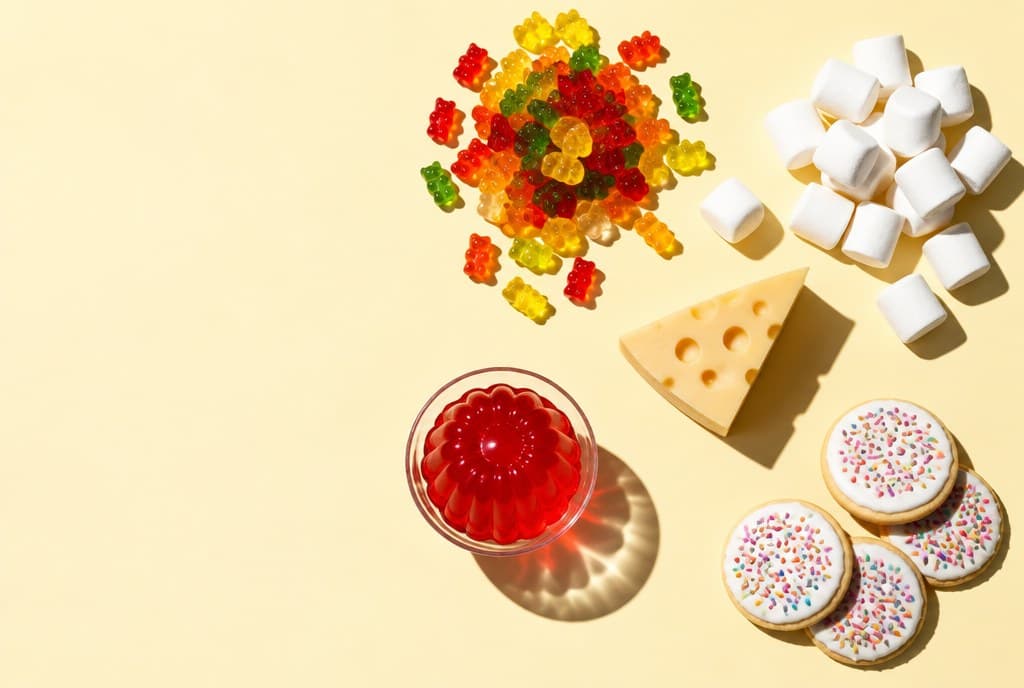
Where it hides: gummy candy, marshmallows, Jell-O style desserts, frosted cereals, some yogurts, gel capsules, vitamins.
The ruling: pork gelatin is not halal. Beef gelatin, in the American Halal Foundation's words, "must be from a zabiha source to be halal." Fish gelatin is generally permissible. A minority of jurists hold that processing transforms gelatin enough to purify it; most certifiers do not accept that.
What to do: look for "beef gelatin (halal)" or "fish gelatin," or a certifier's mark. Bare "gelatin" from a mainstream American brand is usually pork or mixed.
2. Carmine
What it is: a red pigment made from the cochineal insect. It takes about 70,000 insects to make a pound of dye.
On the label as: carmine, cochineal extract, Natural Red 4, E120. The FDA requires it to be declared by name.
Where it hides: strawberry and raspberry yogurt, pink and red candy, fruit drinks, some sausages.
The ruling: the American Halal Foundation classes it as haram. Red 40, a synthetic dye, is a different ingredient.
3. L-cysteine
What it is: an amino acid used to soften dough. Industrially, most of it is made by breaking down animal materials "such as poultry feathers or hog hair." Synthetic and fermentation-made versions exist and cost more.
On the label as: L-cysteine, E920, or sometimes just "dough conditioner."
Where it hides: commercial bread, bagels, pizza crust, fast-food buns.
The ruling: mashbooh. As the American Halal Foundation puts it, "sources matter." A bakery will not usually know its source; a certified product does.
4. Vanilla extract
What it is: vanilla beans steeped in alcohol. Under the FDA's standard, vanilla extract must be at least 35 percent ethyl alcohol by volume. There is no such thing as real vanilla extract without it.
The ruling: disputed. Many scholars allow it in trace amounts because it is not drunk as an intoxicant; others avoid it.
What to do: if you avoid it, look for "alcohol-free vanilla flavor," vanilla powder or vanilla bean paste. Bakeries that cater to Muslim customers often already use these.
5. Enzymes, rennet and emulsifiers
What they are: rennet sets cheese and can come from a calf's stomach or from microbes. Enzymes are used in cheese, bread and juice. Emulsifiers such as mono- and diglycerides can be made from animal or vegetable fat.
The ruling: mashbooh until the source is known. "Microbial rennet," "vegetable rennet" and "vegetable mono- and diglycerides" are the phrases that settle it.
The fast version
- A halal mark from a real certifier settles everything on this page. The certification marks guide shows who they are.
- No mark: scan for gelatin, carmine or cochineal, L-cysteine, and "natural flavors" in candy.
- A kosher symbol rules out pork but not alcohol, and kosher gelatin is not automatically halal.
- The Is it halal? section has the answers for specific brands.
Sources (7)
Questions people ask
Is gelatin halal?
Only if its source is. Most gelatin is made from pork skins or from cattle bones and hides. Pork gelatin is not halal. Beef gelatin is halal when the animal was halal-slaughtered. Fish gelatin is generally accepted. If a label just says 'gelatin' with no source and no halal mark, treat it as doubtful.
Is vanilla extract halal?
Scholars differ. By US law real vanilla extract must contain at least 35 percent alcohol. Many scholars permit it in cooking because it is not consumed as an intoxicant and the amount is tiny; others avoid it. Alcohol-free vanilla flavor and vanilla powder avoid the question.
What is carmine?
A red dye made from crushed cochineal insects, listed as carmine, cochineal extract, Natural Red 4 or E120. The American Halal Foundation rules it not halal. It shows up in red and pink yogurts, candies and drinks.
What does mashbooh mean?
Doubtful. It is the category for ingredients whose source decides whether they are halal, such as gelatin, enzymes and emulsifiers, when the label does not say where they came from.