For makers
Can you sell homemade sauce in Michigan? Cottage food rules for small food makers
Michigan lets you sell some homemade food without a license, up to $50,000 a year. Sauces, hummus and garlic oils are not on the list. What is allowed, what the label must say, and what it takes to sell a shelf-stable sauce legally.
What the cottage food law allows
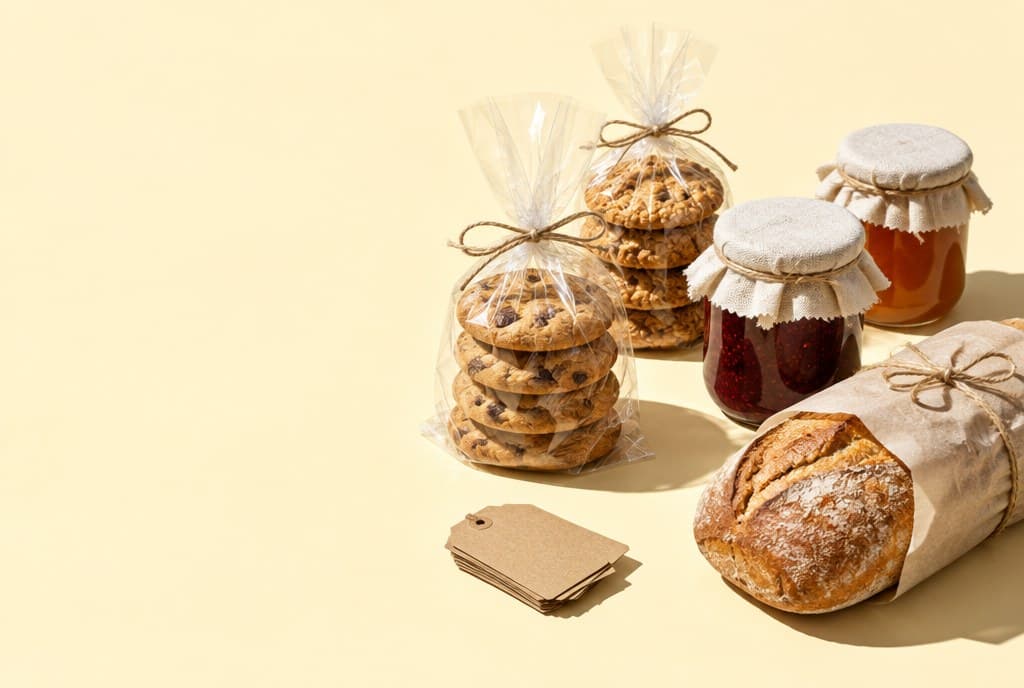
Michigan exempts "cottage food operations" from licensing and inspection when they make non-hazardous foods in the kitchen of the operator's primary home and sell them directly to consumers.
Allowed, for example: breads, cakes, cookies, shelf-stable fruit pies, jams and jellies, granola, dry mixes, dry herb blends, roasted coffee, vinegars, nut butters, candy made without alcohol, flavored honey, and dehydrated fruits and vegetables.
Not allowed:
- Sauces and condiments, "including barbeque sauce, hot sauce, ketchup, or mustard"
- Salad dressings, salsas, tomato and pasta sauces
- Hummus
- Oils flavored with fresh herbs, fruits, vegetables, or garlic, fresh or dried
- Beverages and fermented foods
- Canned fruits and vegetables
- Anything that needs refrigeration: meat, cheesecake, cream pies
So toum, which is garlic in oil, is out twice over. So is a tahini sauce, a shatta, or a pickled anything.
The limits
- $50,000 a year in gross sales. $75,000 if your products sell for $250 or more per unit. Keep sales records.
- Direct to the consumer only. Farmers markets, stands, or online, phone and mail order where the buyer can interact with you before buying.
- Michigan only. No shipping across state lines.
- No wholesale. Not to stores, restaurants, distributors, or on consignment.
What the label must say
Every package needs:
- The name and physical address of the home kitchen. No PO boxes.
- The product name.
- Ingredients in descending order by weight.
- Net weight or volume, with the metric equivalent.
- Allergens, declared the federal way.
- This sentence, in at least 11-point type: "Made in a home kitchen that has not been inspected by the Michigan Department of Agriculture & Rural Development."
Selling a sauce the legal way
Once you are outside the cottage list, or want to sell in stores or ship out of state, you need a food establishment license. For a shelf-stable sauce there is a federal layer too.
- Acidified foods. A low-acid food with acid added so that the finished pH is 4.6 or below, sold unrefrigerated, is an "acidified food" under federal rules. Products kept refrigerated all the way to the shelf are excluded.
- Registration and process filing. Commercial processors of acidified foods must register with the FDA, file a scheduled process for each product before packing it, work under a supervisor who has completed an FDA-recognized course, and keep processing and pH records for three years.
- Facility registration. Any facility that manufactures, processes, packs or holds food for sale in the US must register with the FDA and renew every other year.
That is a lot for one person with a recipe. It is why most small sauce brands start with a co-packer: a licensed manufacturer that already has the registrations, the process authority and the equipment, and produces your recipe under your label. A licensed shared commercial kitchen is the other common route.
The label for a retail product
Per the FDA's labeling guide, the front panel carries what the product is and the net quantity. The information panel carries the ingredient list in descending order, the name and place of business of the manufacturer, packer or distributor, Nutrition Facts, and allergens. The FDA does not pre-approve labels.
Nutrition Facts exemption. A small business can be exempt if it has fewer than 100 full-time-equivalent employees and sells fewer than 100,000 units of the product in the US in a year. It requires an annual notice to the FDA, and you lose it if the label makes a nutrition claim.
Halal claims. There is no federal definition of halal on a label. If you say halal, be ready to say who certifies it, or that it is your own statement. The certification marks guide lists the American certifiers.
Sales tax
Michigan's sales tax is 6 percent, with no local add-ons. Food and food ingredients are exempt, except prepared food intended for immediate consumption: food sold heated, food the seller mixes for sale as a single item, or food sold with utensils. A sealed jar on a shelf is a grocery item. Confirm your own case with the Michigan Department of Treasury.
Have a product ready?
The HFJ marketplace carries a short list of shelf-stable halal products from makers Abe knows. If yours is made in a licensed facility and ships without a cooler, pitch it.
Sources (12)
- michigan.gov/mdard/food-dairy/cottage-food
- michigan.gov/mdard/food-dairy/cottage-food/what-can-i-make
- michigan.gov/mdard/food-dairy/cottage-food/labeling
- michigan.gov/mdard/food-dairy/cottage-food/selling-and-samples
- michigan.gov/mdard/food-dairy/cottage-food/become-a-licensed-food-processor
- law.cornell.edu/cfr/text/21/114.3
- law.cornell.edu/cfr/text/21/108.25
- fda.gov/food/guidance-regulation-food-and-dietary-supplements/registration-food-facilities
- fda.gov/regulatory-information/search-fda-guidance-documents/guidance-industry-food-labeli
- fda.gov/food/labeling-nutrition-guidance-documents-regulatory-information/small-business-n
- michigan.gov/taxes/business-taxes/sales-use-tax
- legislature.mi.gov/Laws/MCL?objectName=mcl-205-54g
Questions people ask
Can I sell homemade garlic sauce or hot sauce from my kitchen in Michigan?
No. Michigan's cottage food rules exclude sauces and condiments, salsas, salad dressings, hummus, and oils flavored with garlic or fresh herbs. Those have to be made in a licensed kitchen.
How much can I sell under Michigan's cottage food law?
Up to $50,000 a year in gross sales with no license, registration or inspection. The cap is $75,000 if you sell products priced at $250 or more per unit.
Can I ship cottage food out of state?
No. Cottage foods can be sold online, by phone or by mail order, but only within Michigan and only where the buyer can interact with you directly before the sale. You cannot sell through stores, restaurants or distributors.
Is food taxed in Michigan?
Groceries are exempt from Michigan's 6 percent sales tax. Prepared food for immediate consumption, such as food sold heated or with utensils, is taxable. A jar of sauce sold as a grocery item is exempt.