Iftar table
Ramadan drinks and sweets: jallab, qamar al-din, tamr hindi, Vimto, qatayef and dates
What is in the pitchers and on the dessert table at iftar: the Ramadan drinks of the Levant and the Gulf, the sweets that only appear this month, and the dates the fast is broken with.
The date comes first
Dates fall into three groups: soft, semi-dry and dry.
- Medjool. Large, soft and very sweet. It makes up roughly a quarter of the world's date trade. The American Medjool industry traces back to eleven palms brought from Morocco in the 1920s and planted in the California desert.
- Deglet Noor. Semi-dry, from Algeria, with a translucent amber color and a honey taste. The usual baking and snacking date.
- Ajwa. Small, oval, nearly black, grown in Medina. Bought as much for where it comes from as how it tastes.
Dearborn's supermarkets stack all three by the case before Ramadan. The grocers guide lists where.
The drinks
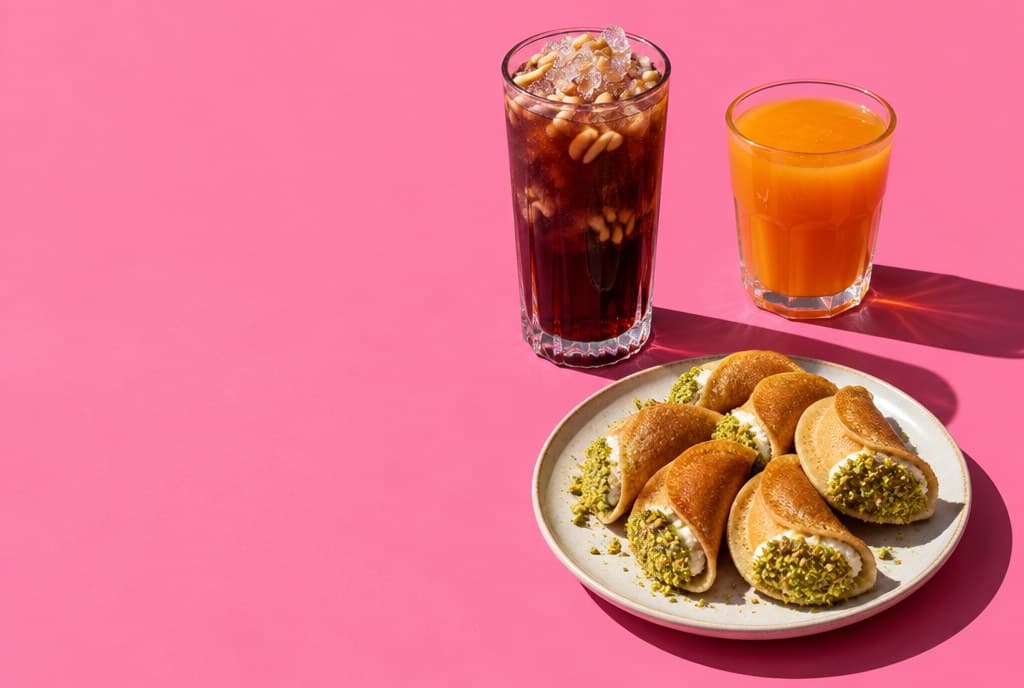
Jallab. A syrup of carob, dates, grape molasses and rose water, diluted with cold water and ice, with pine nuts and raisins floating on top. Lebanese and Syrian.
Qamar al-din. The name means "moon of the faith." Sheets of dried apricot paste are soaked and blended into a thick nectar. A recipe appears in a 13th-century cookbook, and the apricot orchards around Damascus are still considered the source of the best.
Tamr hindi. Tamarind paste boiled, sweetened and strained, sometimes with rose water and lemon. Sour, cold, and very good after a long fast. In the Levant, street vendors carry it in big copper pots.
Vimto. A British cordial of grape, raspberry and blackcurrant, invented in Salford in 1908, which has been the iftar drink of the Gulf for more than eighty years. The licensed Saudi bottler has sold tens of millions of bottles in a single Ramadan season.
Laban. Salted yogurt drink. The quiet one that actually rehydrates you.
The sweets
Qatayef. A small pancake cooked on one side only, filled with sweet cream (ashta) or walnuts, folded into a half-moon, and either eaten fresh or fried and dipped in syrup. This is the Ramadan sweet. Bakeries set up a griddle by the door and make the pancakes all afternoon so families can fill them at home.
Knafeh. Shredded pastry over warm cheese with syrup. Year-round, but the lines get longer.
Maamoul. Date and nut filled semolina cookies. These belong to Eid, at the end of the month.
Baklawa. By the tray, for every iftar invitation.
Where to buy them is in the sweets and bakeries guide.
Building an iftar table
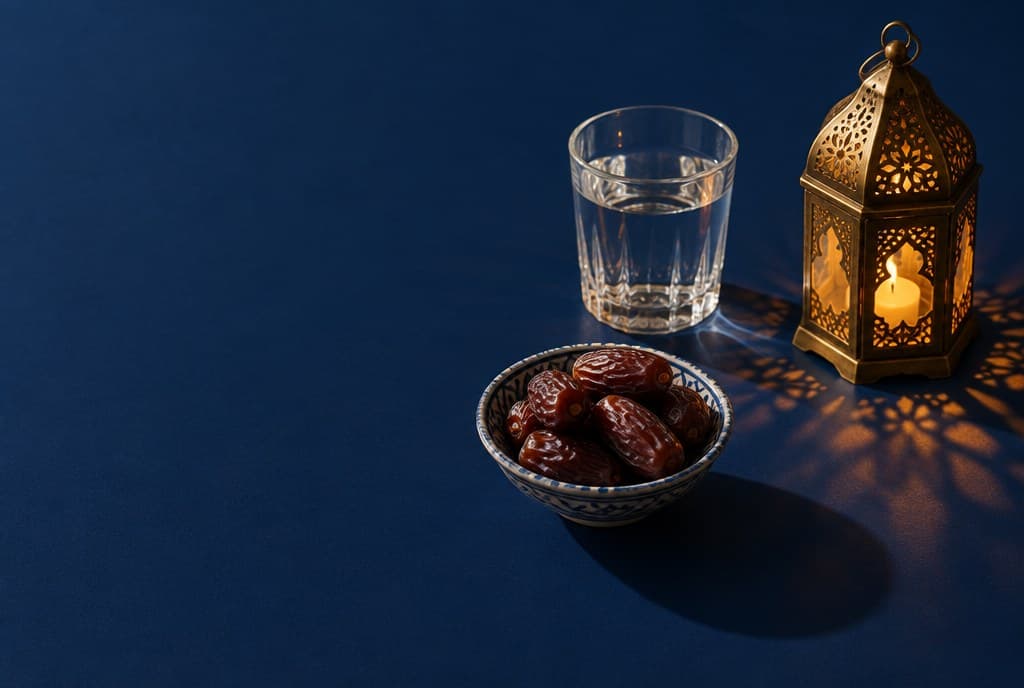
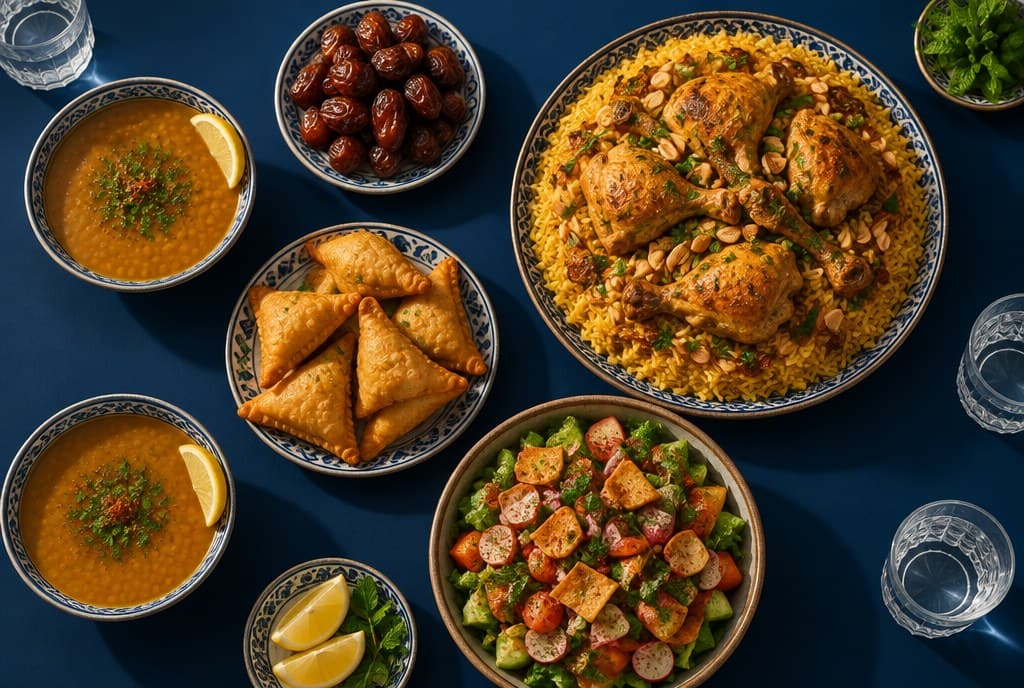
Dates and water. Lentil soup. Fattoush. One main, usually rice and meat. Two pitchers. Then qatayef and tea, late. The menu decoder explains anything on that list you do not recognize, and the Ramadan in Dearborn page covers eating out.
Sources (11)
- en.wikipedia.org/wiki/Date_palm
- en.wikipedia.org/wiki/Medjool
- en.wikipedia.org/wiki/Deglet_Nour
- en.wikipedia.org/wiki/Ajwa_(date)
- en.wikipedia.org/wiki/Jallab
- en.wikipedia.org/wiki/Qamar_al-Din
- en.wikipedia.org/wiki/Tamarind
- en.wikipedia.org/wiki/Vimto
- en.wikipedia.org/wiki/Qatayef
- en.wikipedia.org/wiki/Knafeh
- en.wikipedia.org/wiki/Ma'amoul
Questions people ask
Why do Muslims break their fast with dates?
It follows the practice of the Prophet Muhammad, who broke his fast with dates and water. Dates are also a quick source of sugar after a day without food.
Why is Vimto a Ramadan drink?
Vimto is a British fruit cordial invented in 1908 that became the iftar drink of the Arabian Peninsula over more than eighty years. It is bottled under license in Saudi Arabia, where it holds most of the cordial market, and sales peak every Ramadan.
What is the difference between Medjool and Deglet Noor dates?
Medjool is a large, soft, very sweet date. Deglet Noor is smaller and semi-dry, with a translucent color and a honey-like taste. Ajwa is a small, dark, soft date grown in Medina.